
The Center’s bioactivity-assay platform integrates rapid in vitro cell model and in vivo zebrafish screening with complementary in vivo rodent models to systematically evaluate the efficacy, safety, and underlying mechanisms of medicinal plants, natural products, and their active constituents.
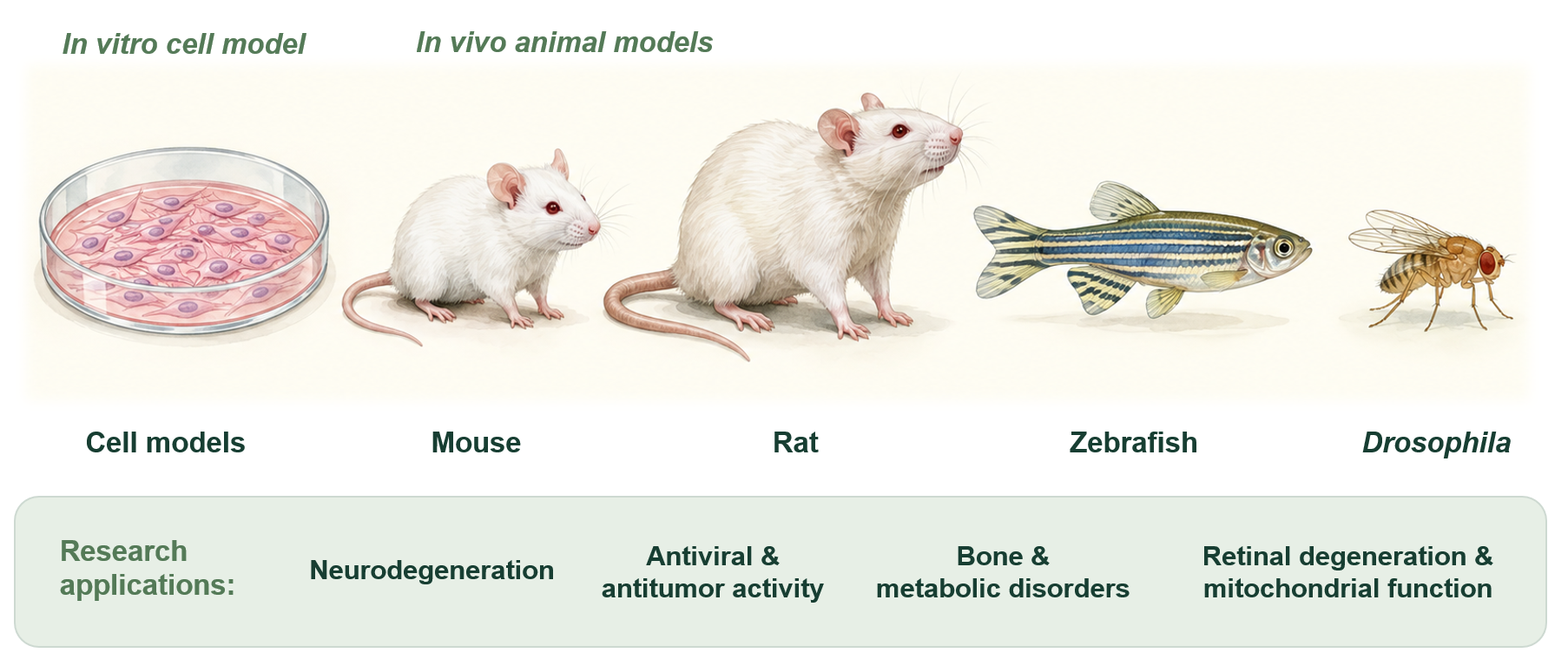
In vitro Cell Models
Controlled and reproducible cell-based screening to elucidate pharmacological mechanisms prior to whole-organism evaluation.
- Cell Viability & Cytotoxicity: Assessment of basic cellular safety, proliferation, and dosage toxicity.
- Antiviral & Antitumor Profiling: Functional screening for targeted bioactivity against viral and cancer models.
- Neuroprotection & Cognitive Health: Cellular models evaluating neurodegeneration mechanisms and neuronal survival.
- Bone Metabolism & Cellular Remodeling: Assays targeting osteoblast/osteoclast activity and skeletal health markers.
- Molecular & Safety Evaluation: Deep-dive mechanistic pathway analysis and biomarker expression profiling.
In vivo Animal Models
Complementary animal systems providing translational validation across efficacy, safety, and pharmacology.
- Mice: Mammalian models for disease pathobiology, therapeutic efficacy, and preclinical validation.
- Rats: Specialized models for pharmacokinetic, metabolic, and systemic disease studies.
- Zebrafish: High-throughput whole-organism screening, phenotype-based assays, and live imaging.
- Drosophila: High-tractability genetic models for functional mechanism mapping and pathway analysis.
Research Applications
- Neurodegeneration, Memory & Sleep Disorders
- Antiviral & Antitumor Therapeutics
- Bone & Metabolic Health
- Retinal Degeneration & Mitochondrial Function